
Why does local weather affect a roof so much?
Weather affects a roof through repeated exposure to moisture, temperature changes, wind, snow, ice, and sunlight. In Warsaw, NY, a roof may face heavy winter snow, freeze-thaw cycles, spring rain, summer heat, and strong wind within the same year.
Most roof damage develops gradually rather than from one dramatic storm. Water may enter through a small flashing gap, shingles may loosen after repeated wind exposure, or attic moisture may condense beneath the roof deck. Understanding how each season affects the roofing system makes it easier to recognize problems early.
How does winter snow affect a roof?
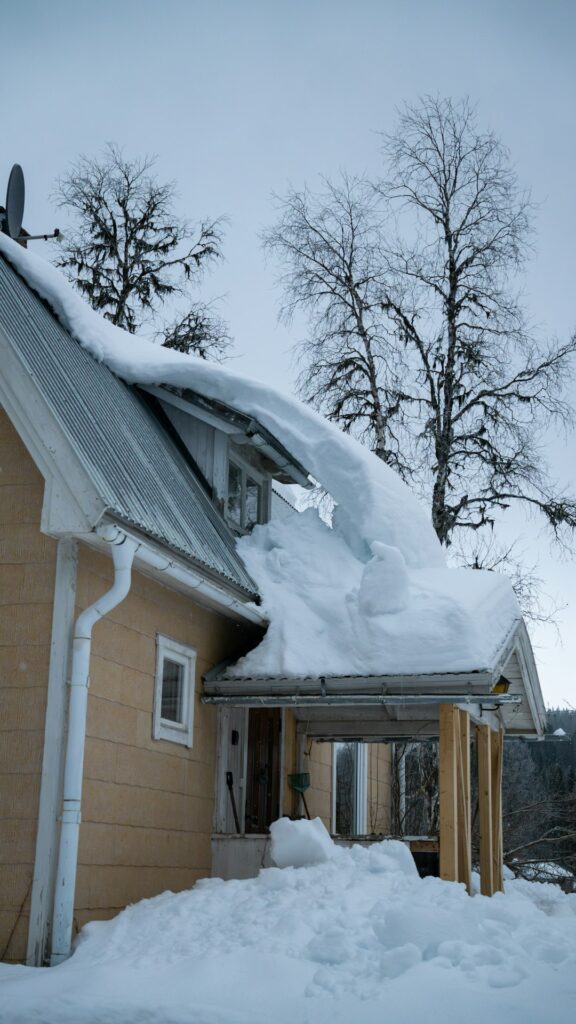
Snow adds weight to the entire roofing system. A light, dry snowfall may not create a serious structural concern, but wet snow is much heavier. Several storms close together can also create uneven loading, especially around valleys, dormers, roof-to-wall intersections, and lower roof sections where drifting snow collects.
Signs of excessive snow-related stress can include:
- New cracks in ceilings or walls
- Doors that suddenly stick
- Sagging roof lines
- Unusual creaking or popping sounds
- Interior leaks near roof valleys or exterior walls
Snow does not always distribute evenly. Wind can pile it against one side of a roof or behind raised sections. Different roof slopes may also hold different amounts, depending on their direction, pitch, shading, and exposure.
Homeowners should avoid climbing onto a snow-covered roof. The surface may be unstable, and walking on frozen shingles can cause additional damage. If the roof appears to be sagging or the building shows signs of structural stress, staying clear of the affected area is the safest response.
What causes ice dams?
Ice dams form when snow melts on a warmer portion of the roof, flows toward a colder eave, and refreezes. The resulting ice ridge can trap later meltwater behind it. That water may work beneath shingles, around flashing, or into attic insulation and ceiling materials.
Large icicles do not automatically mean a roof is leaking, but repeated icicle formation along the same roof edge may indicate uneven roof temperatures or an ice-dam risk. Heat escaping from the living space, insufficient attic insulation, blocked soffit vents, and poor air sealing can all contribute.
A balanced attic system helps keep the underside of the roof deck closer to the outdoor temperature. Insulation slows heat transfer from the living space, while properly arranged intake and exhaust ventilation helps remove moisture and excess heat.
Ice dams should not be chopped with axes, hammers, or sharp tools. Those actions can damage shingles, underlayment, gutters, and flashing. Roof de-icing work is hazardous because both the roof and the ground below may be icy.
How do freeze-thaw cycles damage roofing materials?
Freeze-thaw cycles are especially hard on small weaknesses. Water enters a crack, seam, nail hole, or deteriorated flashing joint. When temperatures fall, the water freezes and expands. Repeated expansion and contraction can widen the opening.
This process may affect:
- Shingles with cracked or lifted edges
- Metal flashing around chimneys, vents, and skylights
- Mortar joints and masonry near roof intersections
- Gutter seams and downspout connections
- Roofing membranes on low-slope sections
A roof can appear intact from the ground while water is moving beneath the surface. Interior staining may show up well after the original opening developed, particularly when insulation delays visible dripping.
What does wind do to a roof?
Wind can lift shingles, loosen flashing, damage ridge caps, and push rain beneath overlapping materials. The most vulnerable areas are usually roof edges, corners, ridges, valleys, and locations where different materials meet.
A single gust may expose an existing weakness, but repeated wind events can gradually fatigue fasteners and seals. After a storm, look from the ground for:
- Missing or displaced shingles
- Shingle edges that appear curled upward
- Exposed underlayment
- Bent metal flashing
- Debris on the roof or in gutters
- Granules collecting heavily near downspouts
Do not assume a roof is undamaged simply because no shingles are missing. Wind-driven rain can enter through small openings, and damage may be limited to flashing or roof penetrations.
How do rain and humidity affect a roof?
Rain is not usually harmful to a sound roof, but persistent moisture exposes weaknesses and keeps materials wet for longer periods. Water can enter through deteriorated flashing, clogged drainage paths, damaged shingles, or improperly sealed penetrations.

Poor drainage is a common source of trouble. Leaves, twigs, ice, and roof granules can block gutters and downspouts. Water may then back up beneath the roof edge or overflow against fascia boards and siding.
Attic humidity creates a separate risk. Warm indoor air that reaches a cold roof deck can condense into water. Over time, this may lead to damp insulation, mold growth, wood deterioration, and rusty fasteners. Bathroom and kitchen exhaust should discharge outdoors rather than into an attic.
Can summer heat and sunlight damage a roof?
Yes. Sunlight and high temperatures gradually dry, stiffen, and age roofing materials. Dark roof surfaces can become significantly hotter than the surrounding air, increasing expansion and contraction in shingles, membranes, flashing, and sealants.
Common heat-related changes include:
- Brittle or cracked shingles
- Loss of protective granules
- Shrinkage or splitting in certain roofing membranes
- Deteriorated caulking around penetrations
- Warped or damaged plastic components
Heat also affects attic temperatures. If the attic is poorly insulated or ventilated, excessive heat can accelerate roof aging and raise indoor cooling demands. Ventilation cannot correct every roofing problem, but it can help manage heat and moisture when designed as part of a complete attic system.
Does hail always leave obvious damage?
No. Hail damage may be visible as dents, bruised shingle surfaces, exposed matting, or dislodged granules, but some impacts are difficult to see from the ground. Damage may be more likely on roof slopes facing the direction of a storm or on softer, older roofing materials.
After a severe thunderstorm, check for damaged siding, window screens, painted surfaces, gutters, and outdoor equipment as well as the roof. Similar impact marks across several exterior surfaces can help indicate that the roof should be inspected carefully.
What should residents check after severe weather?
A safe ground-level inspection after a storm can identify obvious problems before they become interior leaks. Look at the roof edges, gutters, attic ceiling, and upper walls.
Useful checks include:
- Finding wet insulation or water stains in the attic
- Looking for daylight through the roof deck
- Checking whether gutters contain unusual amounts of shingle granules
- Watching for drips during or after rain
- Photographing visible damage from the ground
- Checking whether downspouts are directing water away from the foundation
Do not walk on an icy, wet, steep, or visibly damaged roof. Electrical wires, unstable branches, and falling roof materials can create additional hazards.
Weather cannot be controlled, but its effects can be managed through sound drainage, adequate attic insulation, balanced ventilation, secure flashing, and timely attention to small defects. In a climate with snow, rain, wind, and frequent temperature swings, the condition of those supporting details often determines how well a roof performs through the next season.
