
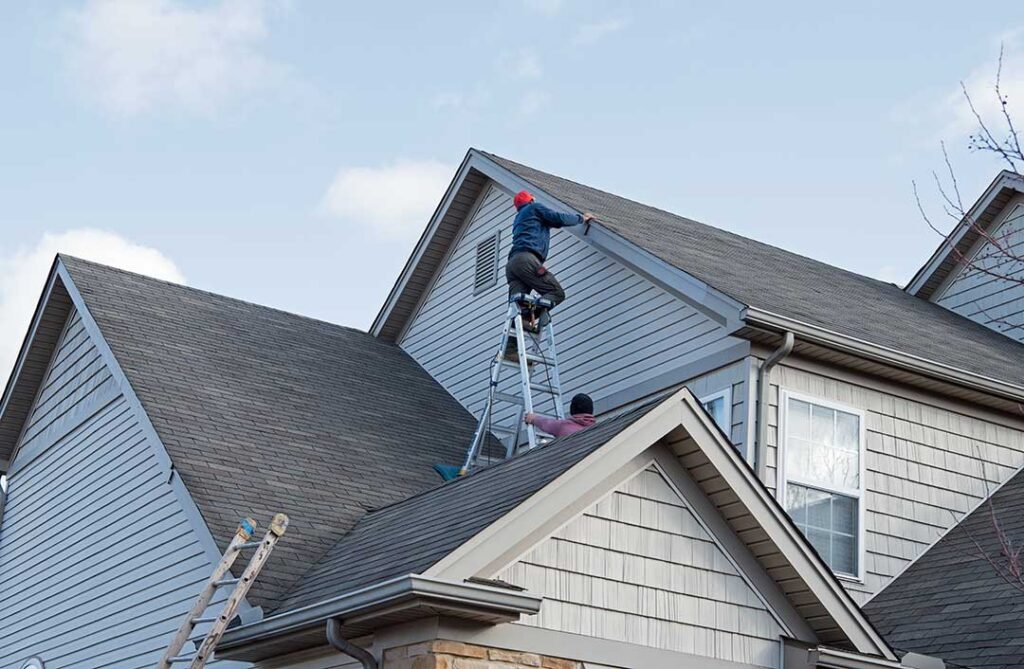
What are the earliest signs of roof damage?
The first signs are often subtle: a small ceiling stain, loose shingle granules in a gutter, damp attic insulation, or flashing that has pulled away from a roof edge. Finding these clues early can help prevent a minor repair from becoming interior water damage or a structural problem.
For residents in Warsaw, NY, seasonal snow, ice, wind, and repeated freeze-thaw cycles can place extra stress on roofing materials. A roof does not have to be visibly collapsing or actively leaking to need attention. Regular observation from the ground, attic, and upper floors can reveal problems before they become obvious.
What should homeowners look for from the ground?
A ground-level inspection is the safest starting point. Use binoculars if needed, and avoid climbing onto a roof that is wet, icy, steep, or covered with snow.
Look for:
- Missing, cracked, curled, or visibly displaced shingles
- Dark patches or areas that appear smoother than the surrounding roof
- Exposed underlayment, roof decking, or fasteners
- Sagging lines along the roof surface or roof edge
- Damaged metal flashing around chimneys, vents, skylights, and roof joints
- Loose or hanging gutters
- Granules collecting at the ends of downspouts or inside gutters
- Excessive moss, algae, or plant growth
A few loose granules are not always a sign of failure, especially after a roof installation. However, a growing amount of gritty material in the gutters may indicate that shingles are losing their protective surface. Once the granule layer wears away, shingles become more vulnerable to sunlight, water, and temperature changes.
A roofline that looks uneven deserves attention. Minor visual irregularity can result from aging materials, but a dip or sag may also indicate wet decking, weakened framing, or prolonged moisture exposure.
Can gutters reveal roof problems?
Yes. Gutters often provide useful evidence about what is happening above them.
Check for shingle granules, small roofing fragments, rust-colored water marks, and separated gutter joints. After heavy rain, observe whether water exits the downspouts or spills over the front edge. Overflow may be caused by leaves or ice, but it can also point to poor drainage or a gutter that has pulled away from the fascia.
Gutters that remain damp or clogged during winter can contribute to ice buildup along the roof edge. In a region with regular snow and freezing temperatures, this may lead to ice dams. An ice dam forms when melting water reaches a colder roof edge, freezes, and blocks later runoff. Water can then move beneath shingles and enter the attic or walls.
Large icicles are not proof that a roof is leaking, but repeated icicle formation, thick ice along the eaves, or water stains near exterior walls are warning signs worth investigating.
What signs appear inside the home?
Interior evidence may appear before anyone notices a damaged shingle. Inspect ceilings, upper-level walls, and areas beneath roof valleys or penetrations.
Common warning signs include:
- Yellow, brown, or gray ceiling stains
- Fresh paint bubbling or peeling
- Cracked plaster or drywall
- Damp spots that appear after rain or snowmelt
- Musty odors in upper rooms
- Wallpaper lifting near ceilings
- Water around attic hatches, vents, or recessed lights
- Daylight visible through the attic roof deck
A stain does not always appear directly below the source of a leak. Water can travel along rafters, roof decking, insulation, or framing before becoming visible. For that reason, a small mark in one room may be connected to a roof penetration or damaged flashing several feet away.
A stain that dries after a storm should not automatically be dismissed. Intermittent leaks can be more difficult to detect because the roof may appear dry during a later inspection.
What should be checked in the attic?
The attic can reveal early moisture problems that are hidden from the living space. Inspect it only when the floor is stable, lighting is adequate, and there is no risk from exposed wiring or unstable insulation.
Look for:
- Wet or compressed insulation
- Darkened wood around nails or roof seams
- Rust on fasteners
- Mold-like staining or a persistent mildew smell
- Water tracks along rafters or roof decking
- Frost on the underside of the roof during cold weather
- Blocked, damaged, or disconnected ventilation paths
Frost in an attic can indicate that warm, moist indoor air is escaping into a cold roof space. As temperatures rise, that frost may melt and make the problem look like a roof leak. Moisture from bathrooms, kitchens, or poor air sealing can also damage wood and insulation even when the shingles are intact.
Do not assume every attic moisture problem requires new roofing materials. The cause may involve ventilation, insulation, ductwork, flashing, or a plumbing vent. Identifying the source matters more than simply covering the visible stain.
How can winter weather expose roof damage?
Snow and ice can hide damaged shingles, but winter conditions often make existing weaknesses easier to notice. After a storm or thaw, watch for new ceiling stains, dripping near exterior walls, heavy icicles, or water entering around attic vents.
Uneven snow melt can also be informative. If one section of a roof melts much faster than nearby sections, heat may be escaping through the ceiling, or that area may have different insulation or ventilation conditions. Melt patterns alone do not prove damage, but repeated unusual patterns deserve a closer look.
Heavy snow loads can stress older or weakened roof structures. Warning signs of possible structural distress include a visibly sagging roof, new cracks in ceilings, doors that suddenly stick, or popping and creaking sounds. If these signs appear after significant snow or ice accumulation, keep people away from the affected area and treat the situation as a safety concern.
Never chop at an ice dam with an axe or sharp tool. That can damage shingles and create a new leak. Roof snow removal is also hazardous, especially on steep, icy, or snow-covered surfaces.
Which roof problems require prompt attention?
Some conditions should not wait for routine maintenance:
- Active water entering the home
- A ceiling that is bulging or sagging
- Exposed electrical fixtures near water
- A large section of missing roofing
- A roof deck or roofline that is visibly sagging
- Major tree impact or storm debris
- Strong structural noises after heavy snow
- Water spreading through walls or ceilings
If water is near electrical equipment, avoid touching the fixture or wet area. If part of the ceiling is bulging, keep people away from it because the drywall may be holding water.
Minor issues, such as a single lifted shingle or loose flashing, may not create immediate danger, but they can allow repeated wetting beneath the roof covering. Prompt documentation with dated photographs can help track whether a condition is changing.
How often should a roof be checked?
A practical schedule is to look over the roof from the ground in spring and fall, and again after unusually strong wind, heavy snow, or ice. Gutters and downspouts should be observed during rain to confirm that water is moving away from the building.
An attic check is useful after the first major storms of the season and whenever an indoor stain, odor, or temperature change raises concern. Older homes, additions, low-slope sections, and roof areas with multiple valleys or penetrations may need closer observation because they have more places where water can collect or change direction.
A roof inspection should never require unsafe climbing. Walking on wet shingles, frost-covered surfaces, or areas weakened by hidden moisture can cause falls and additional damage. When structural distress, active leakage, or hazardous access is involved, a qualified building or roofing specialist may be needed to evaluate the condition safely.
